Concept development
NukeFarm™
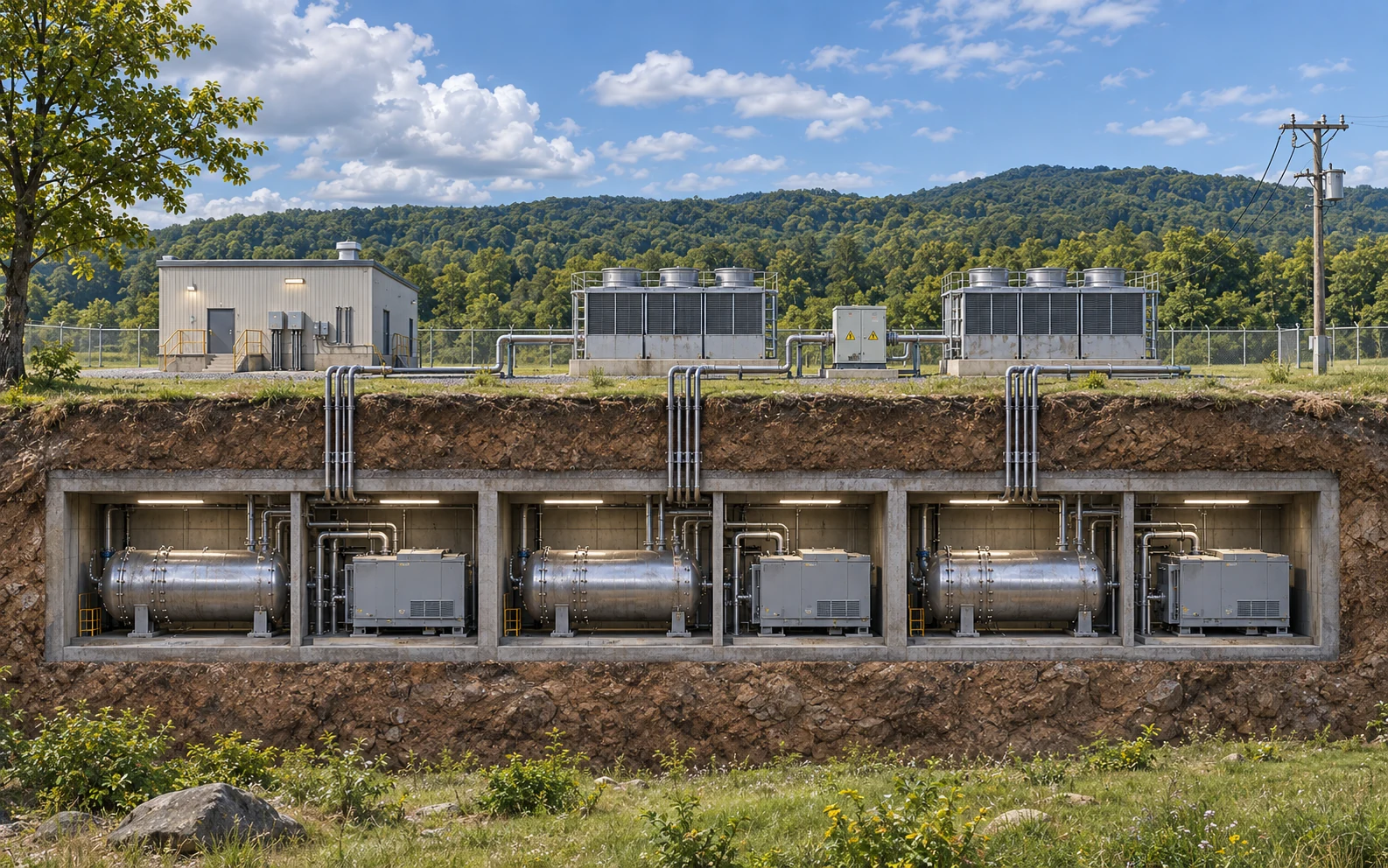
Several NukeReactor systems on one site, sharing an electrical connection and supporting systems.
What it is meant to address
Some sites will need more electricity than one NukeReactor system could provide. NukeFarm explores adding capacity with more modules rather than building one larger reactor.
How it connects to NukeReactor
NukeFarm is a site arrangement of NukeReactor systems. Each system keeps its reactor and conversion modules; the site shares electrical connection, cooling infrastructure, monitoring and service access where engineering allows.
Concept diagram
System architecture at a glance
An original diagram illustrating the intended functional connections. It is not a verified engineering drawing or a model of built hardware.

Intended sequence
How it would work
An intended sequence for a future project, not a description of completed work.
Site assessment
Load, land, geology, cooling options and grid connection are evaluated.
Layout definition
Number of systems, spacing and shared infrastructure are defined for the site.
Phased installation
Systems could be added in stages as demand grows.
Shared operation
Monitoring and service cover all systems on the site.
Status
What is defined and what needs verification
Defined now
- Concept: several NukeReactor systems on one site
- Underground placement as the design direction
- Shared electrical connection and supporting systems
Requires verification
- Number of systems per site and total output
- Spacing, depth and civil works
- Shared cooling capacity
- Access for installation and service
- Site-specific approvals
Related material
Sources and related pages
- Small Modular Reactors: Advances in SMR Developments 2024International Atomic Energy Agency (IAEA) · reference
Listing a publication or tool does not imply collaboration, endorsement or use in a completed study. See Engineering & Sources.
- NukeReactor™Energy · Main project
- NukeReactor™Energy · Main project
FAQ
Questions
What is the total output of a NukeFarm?
It is not fixed. Module count, layout and output would follow site-specific engineering.
Why underground?
Underground placement is the current design direction. Depth, civil works, shielding and access still require engineering.
Planning a large load?
Share your site and power needs. We discuss options at concept level.