Technical guide · Electricity & AI
Nuclear power for AI data centers
Demand for continuous electricity at data centers is rising. Nuclear power is one potential supply option, but a feasible project begins with the electrical load, the grid, the site and the regulatory environment—not with a reactor rendering.
Independent background guide · Reviewed 22 November 2026 · For education, not nuclear design approval.
Why data center electricity is a serious planning issue
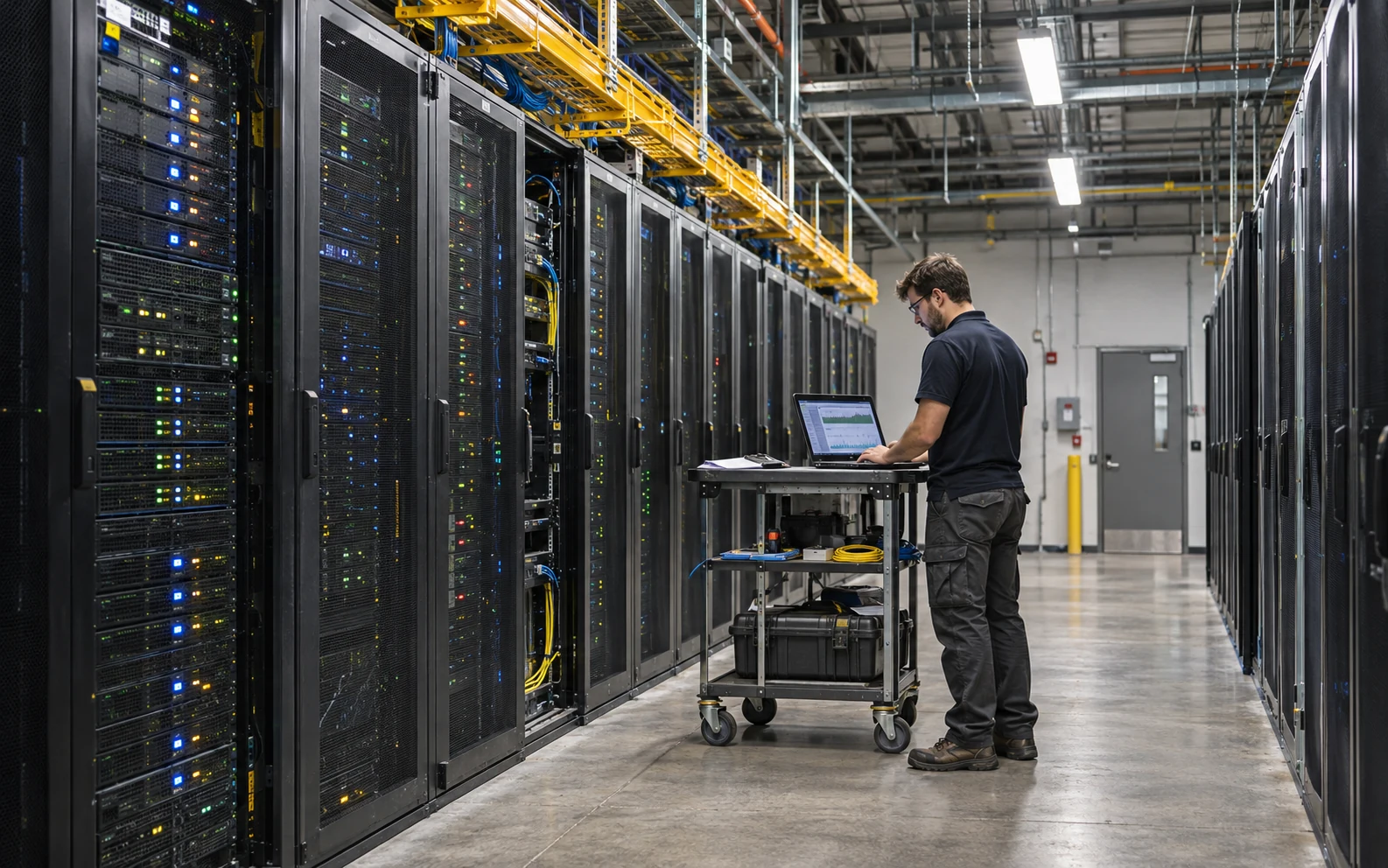
The International Energy Agency documented substantial growth in data-center electricity use, including AI-oriented facilities. Yet demand differs by region, facility type, efficiency, workload and construction schedule. A power plan should rely on a metered load profile or a clearly identified forecast, not a headline estimate for the entire industry.
Continuous power means a system, not one component
A data center requires dependable delivery through normal operation, faults and maintenance. The engineering picture includes generation, transmission or distribution connection, reserve capacity, electrical protection, uninterruptible power supplies and operational procedures. Nuclear plants are designed around their own safety obligations; these cannot be bypassed simply because the customer requires high uptime.
What “on-site nuclear power” implies
A reactor adjacent to a campus is still a regulated nuclear facility. Land use, geology, emergency planning, security boundaries, environmental assessment, cooling infrastructure, waste management and grid interface must all be addressed. Whether energy is delivered directly, through a private wire or over the public grid depends on the project and local rules.
Why heat rejection matters as much as electrical output
Data centers already remove large amounts of heat from IT equipment. Thermal power plants must reject the part of reactor heat not converted into electricity. These are distinct cooling duties that interact with the site’s water, ambient temperature and permitted environmental limits. A plant-level heat and water balance is needed before stating usable capacity.
Economics need realistic assumptions
Comparisons should consider financing, design maturity, engineering, licensing, site works, construction, fuel, operations, maintenance, insurance and eventual decommissioning. A large nominal project pipeline does not provide a bankable cost estimate for a concept-stage product. The economics of an SMR cannot be inferred from its electrical rating alone.
Practical first steps for developers
Start with an hourly load forecast, a grid-interconnection assessment, a site constraints register, a cooling-water study and a shortlist of legally available power solutions. Next comes independent feasibility work using a documented reference design and jurisdiction-specific approval pathway. Only then is it sensible to discuss procurement or delivery dates.
Independent technical references
These sources are independent background material, not evidence of affiliation, endorsement or validation of NukeSystems.
- Small Modular Reactors: Advances in SMR Developments 2024International Atomic Energy Agency (IAEA) · reference
- Advanced reactors: pre-application process for prospective applicantsU.S. Nuclear Regulatory Commission (NRC) · reference
- Key Questions on Energy and AI — 2026International Energy Agency (IEA) · reference
- About the IAEA Small Modular Reactor PlatformInternational Atomic Energy Agency (IAEA) · reference
Listing a publication or tool does not imply collaboration, endorsement or use in a completed study. See Engineering & Sources.
Frequently asked questions
Can a data center use nuclear power today?
Some data-center operators procure power from existing nuclear generation. Building a new dedicated reactor is a separate long-term engineering, licensing and financing project.
Does NukeSystems sell operating reactors?
No. The website describes a preliminary modular reactor concept and related research directions.
What should a potential partner send first?
A location, load profile, available land, grid situation and desired schedule are useful starting points for an exploratory conversation.
Continue exploring
Discuss a research question
We welcome written technical questions and collaboration inquiries.